Best Portable Power Station for Van Life (What Works in a Minivan)
What is the best portable power station for van life? Most power station guides are built for full-timers in cargo vans.
They assume you’re pulling 3,000+ watt-hours a day, running an induction cooktop, and sleeping in your van every night.
That’s not how most of us live.
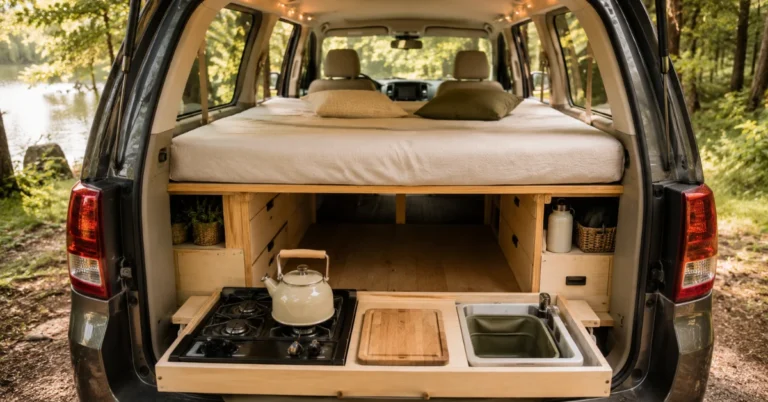
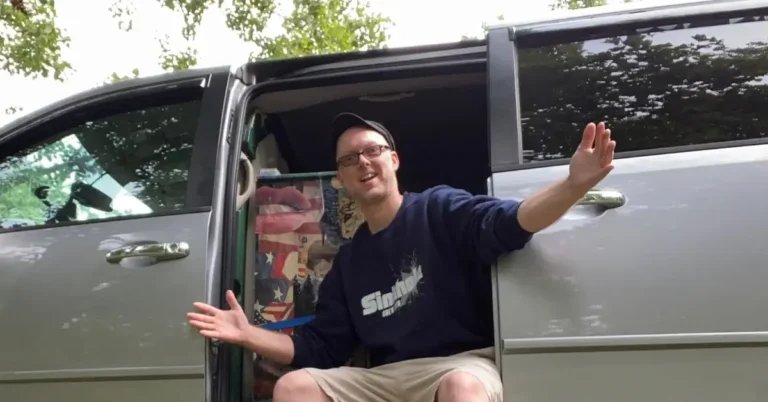
I run a 2015 Dodge Grand Caravan.
Weekend trips and extended runs, not full-time, are what I like to do right now.
My build cost under $9,000 all-in.
And my power setup has worked on trips to Arizona, twice, and through Kentucky’s Land Between the Lakes without a single issue.
Here’s what I learned: the math matters more than the brand. Get the sizing right first, then pick the station.
How to Size a Power Station for a Minivan
A minivan build has real constraints. You’re not working with the cargo volume of a Transit or a Sprinter. Every pound and every cubic inch counts. That changes the calculus.
Start here. List every device you’ll run and how many watts it draws. Multiply watts by the hours you’ll run it per day. That gives you watt-hours (Wh) per day.
Minivan-realistic load example:
| Device | Watts | Hours/day | Wh/day |
|---|---|---|---|
| Compressor fridge (12V, ~45W avg) | 45 | 24 | ~60 |
| Phone charge (x2) | 10 | 2 | 20 |
| Laptop | 65 | 3 | 195 |
| LED lighting | 10 | 4 | 40 |
| Mini drip coffee maker | 650 | 0.25 | ~163 |
| Total | ~478 Wh/day |
A 500Wh station handles a realistic weekend load comfortably with a buffer. For anything with a compressor fridge running around the clock, you want 1000Wh or you’ll be managing it constantly.
The key number: daily Wh draw plus 20% overhead. That’s your minimum station size.
Minivan-specific factors that change the math
Space is real. The Jackery Explorer 1000 weighs 21.8 lbs and is manageable. Anything significantly heavier or bulkier starts becoming a problem in a Grand Caravan. Keep that in mind when you’re looking at 2000Wh units.
You drive between stops. This is actually a huge advantage that most power guides miss entirely. Read the next section before you write off a smaller station.
Charging While You Drive: The Minivan Advantage
Most van life power guides focus on solar as the primary recharge strategy. Solar is great. But here’s what nobody talks about: if you have a minivan with a built-in inverter and a 120V AC outlet, you have a faster charging option available every time you’re on the road.
My 2015 Dodge Grand Caravan R/T has the entertainment/media package, which includes a factory 120V AC outlet powered by a built-in inverter. When I drive, I plug the Jackery directly into that AC outlet.
The difference matters:
- AC outlet (built-in inverter) while driving: 6.5 hours to full on the Jackery 1000
- 12V car adapter (cigarette lighter port): 12.5 hours to full
That’s nearly 2x faster. For a weekend tripper doing 2 to 3 hour drives between locations, the AC charge method means you arrive with a meaningfully fuller station than the trickle charge method would give you.
Check your minivan’s trim level. The 120V AC outlet is a package feature, not standard on all Grand Caravan trims. If you have it, use it. If you don’t, the 12V adapter still works, it’s just slower.
My Portable Power Station for Van Life Setup: Two Stations Instead of One Big One
I run two Jackerys in Voyager, my current Grand Caravan build.
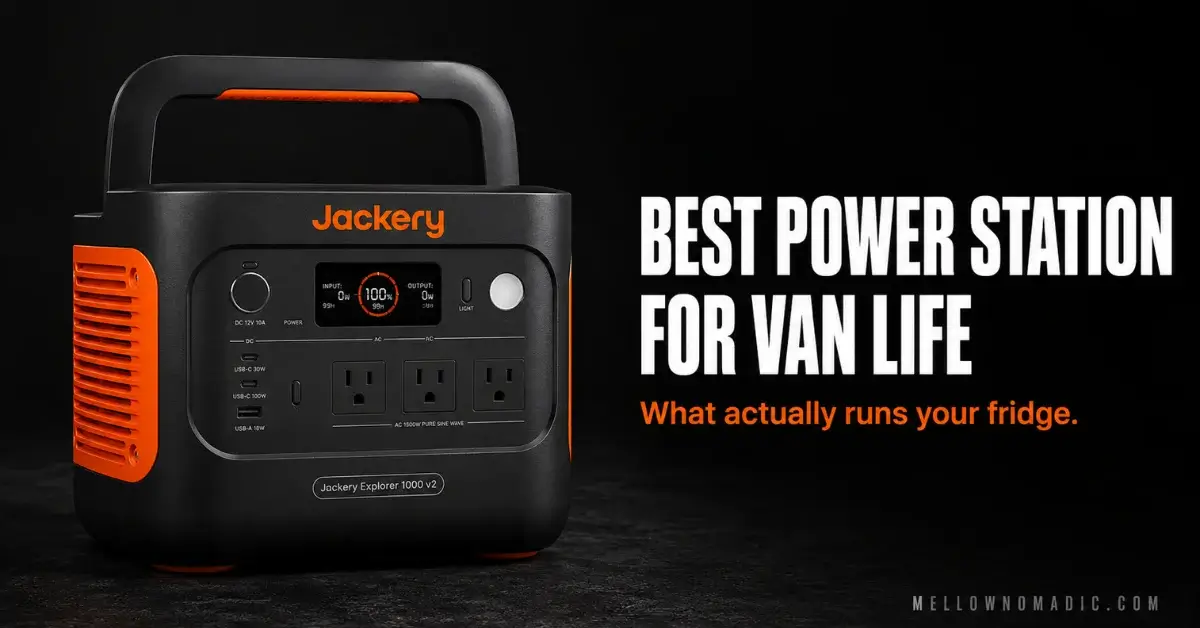
Jackery Explorer 1000 (primary)
- 1002Wh capacity
- 1000W continuous AC output / 2000W surge
- AC wall charge: 6.5 hours
- 12V car adapter charge: 12.5 hours
- Solar input: 12-30V, max 200W
- Weight: 21.8 lbs
Jackery Explorer 240 (secondary)
- 240Wh capacity
- 200W continuous AC output
- AC wall charge: ~5.5 hours
- Car adapter charge: ~6.5 hours
- Solar input: 12-30V, max ~65W practical
- Weight: 6.6 lbs
The 240 handles light loads: phone charging, the Mr. Coffee, small device charging. The 1000 runs the Iceco JP40 compressor fridge and anything heavier.
Two smaller stations beat one giant station in a minivan for a few reasons. You can move them independently. You can charge one while running loads from the other. If one has an issue, you’re not dead in the water. And the weight is distributed rather than concentrated.
One 1000Wh unit would probably handle my typical weekend load. But having the 240 as a dedicated light-load station keeps the 1000 at higher charge levels longer.
The Solar Panel Compatibility Problem Nobody Talks About
Everyone in the van life space tells you to match wattage to your power station’s solar input spec. That’s true, but it’s not the whole story.
Here’s what Rich Solar confirmed directly when I was building out my solar setup: the panel’s resistance (ohms) must match what the power station’s MPPT charge controller requires. Wattage and voltage are not enough. If the ohms don’t match the MPPT spec, the panel will not charge the station. Period.
I learned this the hard way with a Santan Solar panel. Right wattage. Right voltage. Wouldn’t charge my Jackery 1000. I contacted Rich Solar, and they walked me through why: the ohms were off. The MPPT controller on the Jackery couldn’t read the panel correctly. I sold the Santan panel.
The panels I’ve confirmed work:
- Rich Solar 150W: ohms match Jackery 1000’s MPPT requirements. Works. View on Amazon
- Togo Power 120W folding: works with both the Jackery 1000 and Jackery 240. View on Amazon
Before you buy any third-party solar panel for a Jackery, contact the panel manufacturer. Ask them directly whether the panel’s resistance is compatible with Jackery’s MPPT controller spec. Don’t just look at wattage and voltage. If they can’t answer the question, that’s your answer.
This is not a Jackery-specific problem. Any power station with an MPPT controller has specific requirements. Get confirmation before you buy.
Three-Tier Picks for Minivan Builds
These are real picks sized for the actual constraints of a minivan camper. Prices fluctuate; check current Amazon pricing via the links.
Tier 1: Weekend Starter (Under 300Wh)
For short trips, light loads, and anyone not running a compressor fridge.
Jackery Explorer 240
The 240 is where I’d tell most people to start if they’re new to van life and not sure how much power they actually need. It’s 6.6 lbs, handles everything except high-draw appliances, and it’s an honest first step before you know your real usage patterns. View on Amazon
Who this is for: First van trip, weekend camper, no compressor fridge yet.
Tier 2: The Minivan Sweet Spot (700-1000Wh)
For anyone running a compressor fridge, a laptop, and wanting real margin.
Jackery Explorer 1000
This is what I run as my primary station. The original 1000 gives you 1002Wh, weighs 21.8 lbs, and charges in 6.5 hours via AC. It has handled every trip I’ve taken without issue. Jackery now sells the 1000 v2, which upgrades to LFP battery chemistry, longer cycle life and more stable at temperature extremes. I’ve personally run the original. The v2 is the current available version and the upgrade path worth looking at if you’re buying new.
View Jackery Explorer 1000 on Amazon
Who this is for: Anyone running a compressor fridge, doing trips longer than 2 nights, or wanting headroom.
Tier 3: Two-Station System (Primary + Secondary)
or longer trips, mixed loads, and anyone who wants the flexibility of independent units.
Jackery Explorer 1000 + Jackery Explorer 240
This is my exact setup in Voyager. The 1000 handles heavy loads and the fridge. The 240 handles the coffee maker, phones, and anything that doesn’t need the big unit’s capacity. Together they give you 1242Wh of total capacity with the distributed weight and redundancy advantages covered above.
Jackery Explorer 1000 on Amazon
Jackery Explorer 240 on Amazon
Who this is for: Extended trips, anyone who wants redundancy, and minivan builders who want the flexibility of moving stations around independently.
Best Portable Power Station for Van Life FAQ
Q: What size power station do I need for van life in a minivan?
A: Calculate your daily watt-hour draw by listing every device, its wattage, and hours of use per day. For a minivan build with a compressor fridge, laptop, and basic devices, most weekend trips fall in the 400 to 600 Wh per day range. A 1000Wh station gives you solid margin. If you’re not running a fridge, a 240 to 500Wh unit is usually enough for weekends.
Q: Can I charge a portable power station while driving in my minivan?
A: Yes. You can use the 12V cigarette lighter adapter, but it’s slow, about 12.5 hours to fully charge a 1000Wh station. If your minivan has a built-in 120V AC outlet (some Grand Caravan trims with the entertainment/media package have this), you can charge via AC input while driving, which cuts the time to around 6.5 hours.
Q: Does any solar panel work with a Jackery power station?
A: No. Voltage and wattage are not the only factors. The panel’s resistance (ohms) must match what the Jackery’s MPPT charge controller requires. A panel with the wrong resistance will not charge the station, regardless of its wattage rating. Contact the panel manufacturer and confirm ohm compatibility with the Jackery MPPT spec before purchasing.
Q: Is the Jackery Explorer 1000 good for van life?
A: It’s one of the most commonly used stations in the van life community for good reason. At 1002Wh and 21.8 lbs, it balances capacity and portability well for a minivan build. The original model uses lithium-ion NMC chemistry rated to 500 cycles to 80% capacity. Newer Jackery models use LFP chemistry with longer cycle life if longevity is a priority.
Q: Is one power station enough for a minivan camper?
A: Depends on your load. One 1000Wh unit handles most weekend builds that use a compressor fridge. A two-station setup (ex: 1000 + a 240) gives you more flexibility, you can run light loads from the smaller unit to preserve the bigger station’s charge, and you have redundancy if one has an issue.
Portable Power Station for Van Life Calculator
Van Life Power Station Calculator
Select your gear, set your hours, and get a station recommendation sized for how you actually travel.
Find Your People: Nomadic, Vanlife, and RV Meetups:

Planning your first trip? Check out the 2026 Nomadic Gatherings Guide for minivan
camping meetups, vanlife events, and nomadic community gatherings happening
this year.